Control Tower Restoration Appeal

Our Control Tower was a nerve centre of operations against Nazi Germany. It was built in 1942, when RAF Elvington was opened as part of Bomber Command. Through these windows, Halifax bombers were counted out on missions and counted back – with often fewer returning than had taken off. Out of 4,000 sorties, almost half of all aircrew never returned - killed in action or taken as prisoners of war. Now though, the Tower needs your help!

save our tower campaign

Your support means all the difference
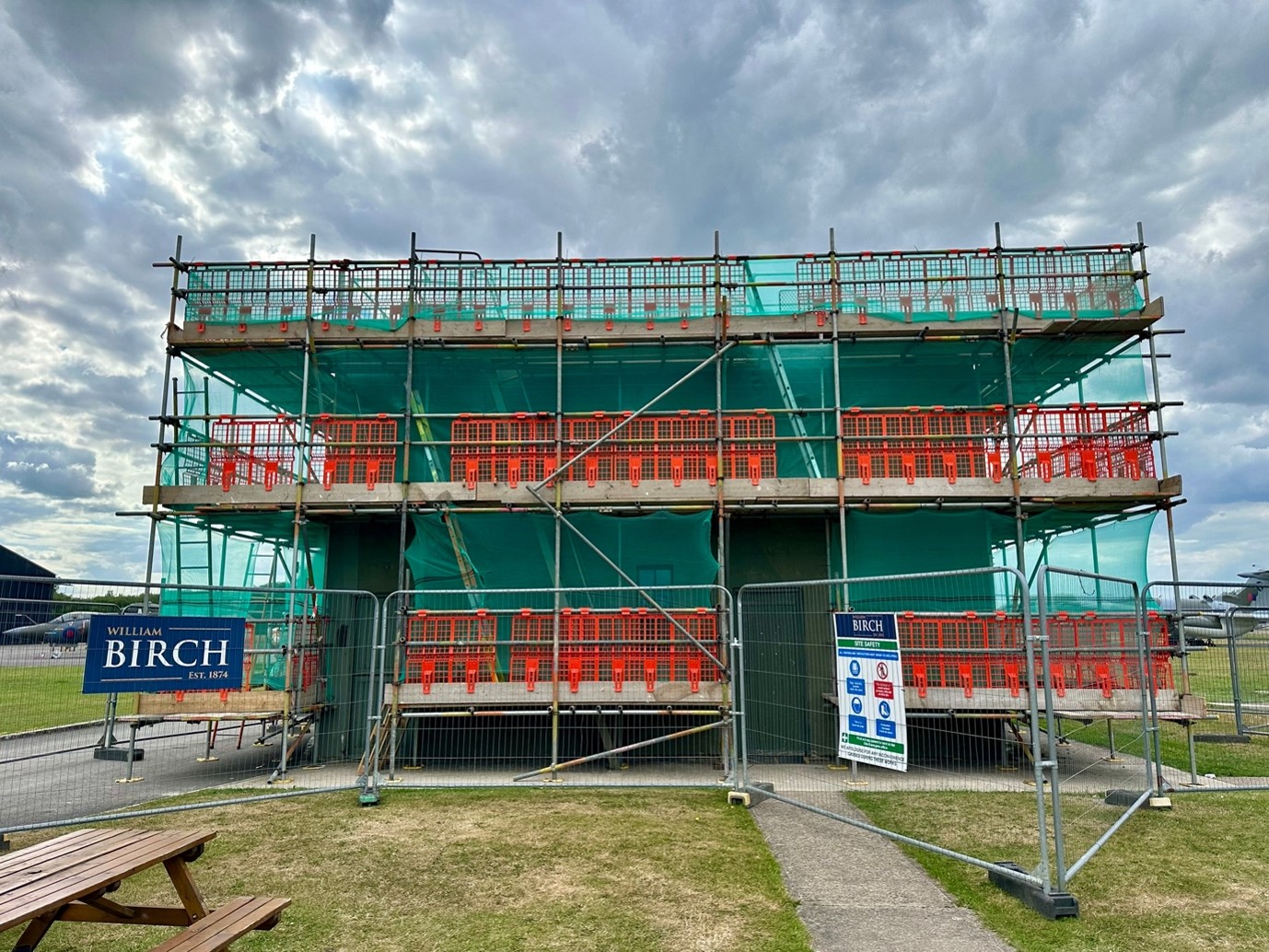
Tower with scaff

Fantastic Progress on the Control Tower Appeal

We are so grateful to all who have supported the restoration of this building. We are delighted to report that following the success of our appeal, we are well on way to completing the third and final part of the repairs of the exterior of the building.

Together with grants from family foundations, from the sale of second-hand books and surplus models on site organised by our volunteers, with your donations, we have raised over £200,000 to help ensure this important building is safe and watertight once again.

Thank you!

The next stage is even more exciting!

Once the scaffolding is down, we will start repairing the interior fabric and refreshing the displays in the operations, radio and telephone rooms and creating a new, ground floor, working meteorological office.

Will you help us bring the tower back to life? We’d love to make it an exciting, interactive and immersive experience for all ages. 

'This is one of a very small number of control towers on Second World War airfields which are either exceptionally well-preserved or have distinguished operational histories. Their iconic value both as operational nerve centres and as memorials ... has long been recognised.'

1000014782

Doorway to the Past

Help us raise the funds to save this historic building, allowing us to teach further generations about the bravery and sacrifice of the bomber crews and their colleagues on the ground.

Window to the Future

Make a donation today. This will allow the Tower to remain a living monument to the role of Bomber Command in WW2. Any funds remaining after we reach our target will go towards restoring our historic buildings on our site.

Blackburn Mercury Monoplane 1911 (Replica) AH (BAPC) 130 YAM Jan.1995

The Blackburn Mercury Monoplane is regarded as the first truly successful aircraft made by Blackburn at their factory in Leeds. The Mercury I, powered by a 50 hp Isaacson radial engine, was displayed at the Olympia Aero Show in March 1911 and made its debut flying from the beach at Filey with the newly formed Blackburn Flying School. In May 1911, it flew from Filey to Scarborough and back in 19 minutes at an average speed of 50 mph, reaching an altitude of 1200 feet.
This aircraft crashed the next day when the engine seized and the propeller flew off! The Mercury I was followed by two Mercury II aircraft powered by 50 hp Gnome engines, and six Mercury III aircraft, with a number of different engines. Sadly, a Renault powered Mercury crashed at Filey in December 1911, killing an instructor and passenger.
The Museum’s replica was built for Yorkshire Television in 1979 for the Edwardian drama series ‘Flambards’, and was taxied with a car engine. It came to YAM on 10th January 1995 and after a long period in storage it was painstakingly restored to a superb display standard, and was unveiled in June 2000 by Professor Robert Blackburn, grandson of Robert Blackburn, the aviation pioneer.

AVRO 504K ‘H1968’ (Replica) AH (BAPC) 42 YAM Oct. 1994

The Avro 504 first flew in 1913. In the opening phases of the First World War, it served with front-line squadrons in the Royal Flying Corps and Royal Naval Air Service for bombing and reconnaissance, but from 1915 onwards the aircraft entered the training role for which it is most celebrated.

Over 8,000 Avro 504s were built. In 1918, the Royal Air Force had about 3,000, of which 2,276 were trainers.

The Avro 504 was stationed at many Yorkshire airfields, including Tadcaster near the A1/A64 junction, where a period hangar can still be seen.

The Yorkshire Air Museum’s replica was built by apprentices at RAF Halton and appeared at the Royal Tournament in 1968 to commemorate what was then fifty years since the end of the First World War. The aircraft was refurbished in early 2015 to be transported to Thiepval, Northern France, for the Somme Centenary commemoration event, on request of the British Government. In May 2018, it was also displayed at the impressive Hotel Les Invalides in central Paris for a joint RAF / French Air Force event to mark the Centenary of the Royal Air Force and over 100 years of British and French Air Force collaboration.