Shackleton Update Nov 2024

Shackleton engineering weekend, 16/17 November 2024 by Graham Buckle
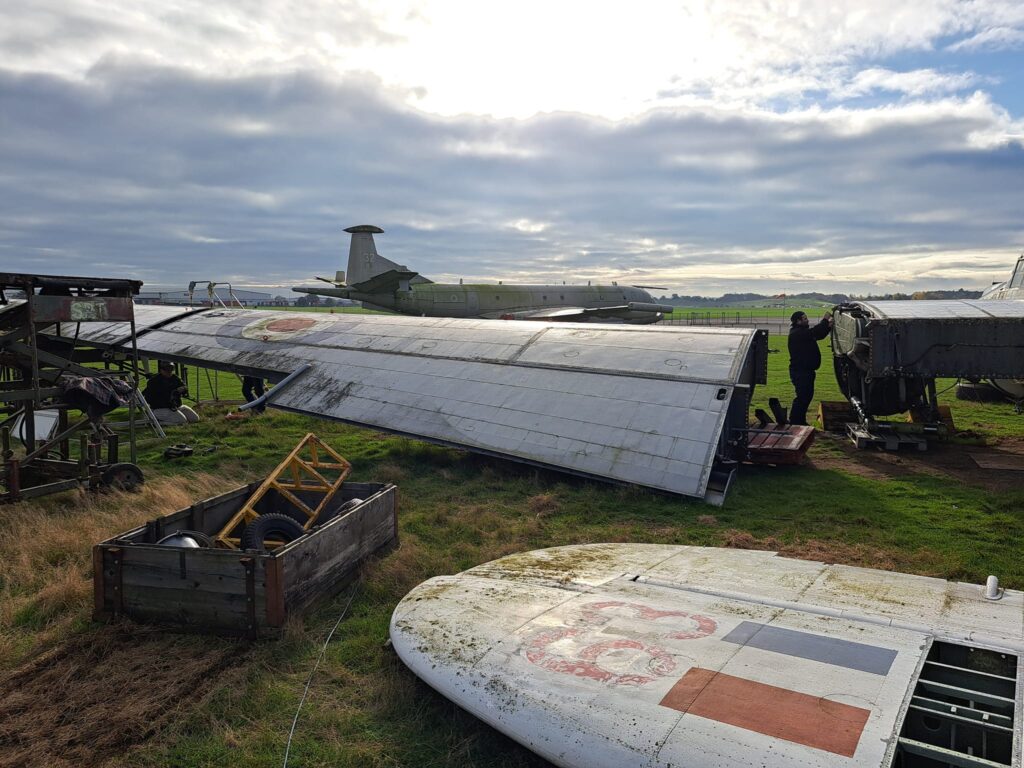
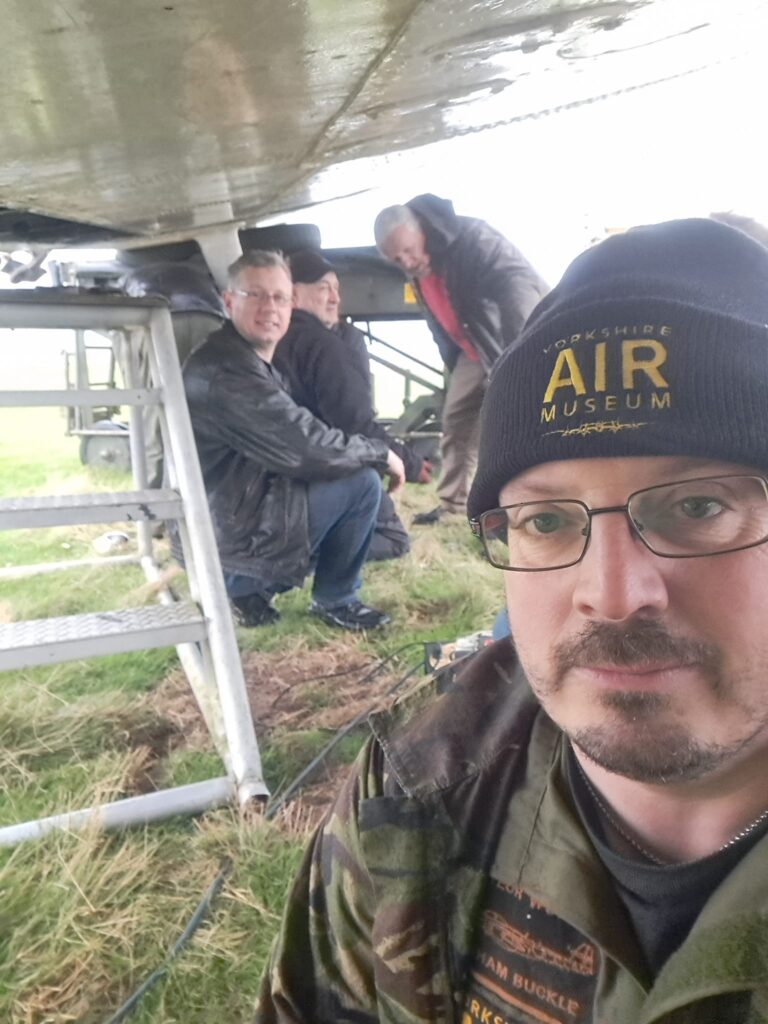
John Best and myself trekked south to Coventry Airport to assist in the ongoing dismantling of Shackleton WR963 into small enough sections to be roaded up to her new home at YAM.
A call had gone out to the team for assistance, and was well answered with enough bodies on site for several teams to attack different bits of the aircraft at the same time, a luxury!
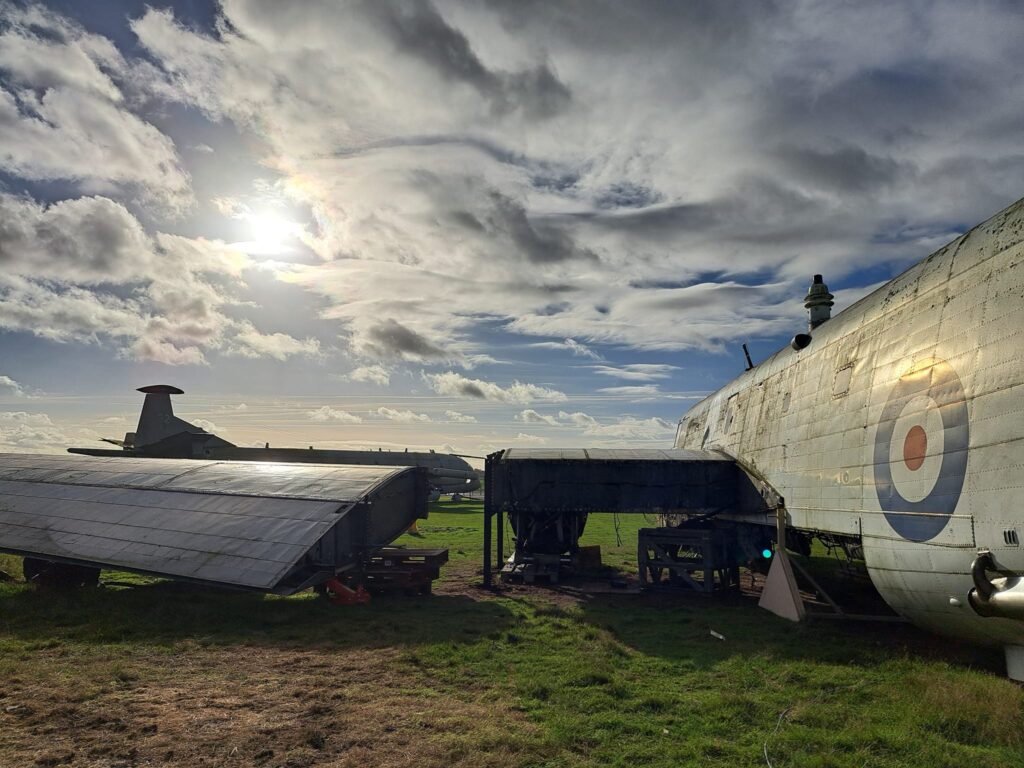
The cunning plan for the weekend was to remove the wing tip sections, attempt to remove the trailing edges of the wings to make them small enough to move, to split the rudders off from the tailfins, and carry on working to clear the interior wiring, fixtures and fittings away from the fuselage transport joints.
The weather on day 1 started suspiciously favourably for those of us working outside, meaning we could get the power tools out to speed up progress on removing the numerous panel screws.
By the time the rain finally arrived about 3pm, we had made huge progress, even removing one wingtip before close of play. The Sunday morning saw good weather again, and before lunch we had split the rudders from the fins. Before the rain came in again in the late afternoon we’d got the starboard wingtip and port wing trailing edge just about ready to remove.
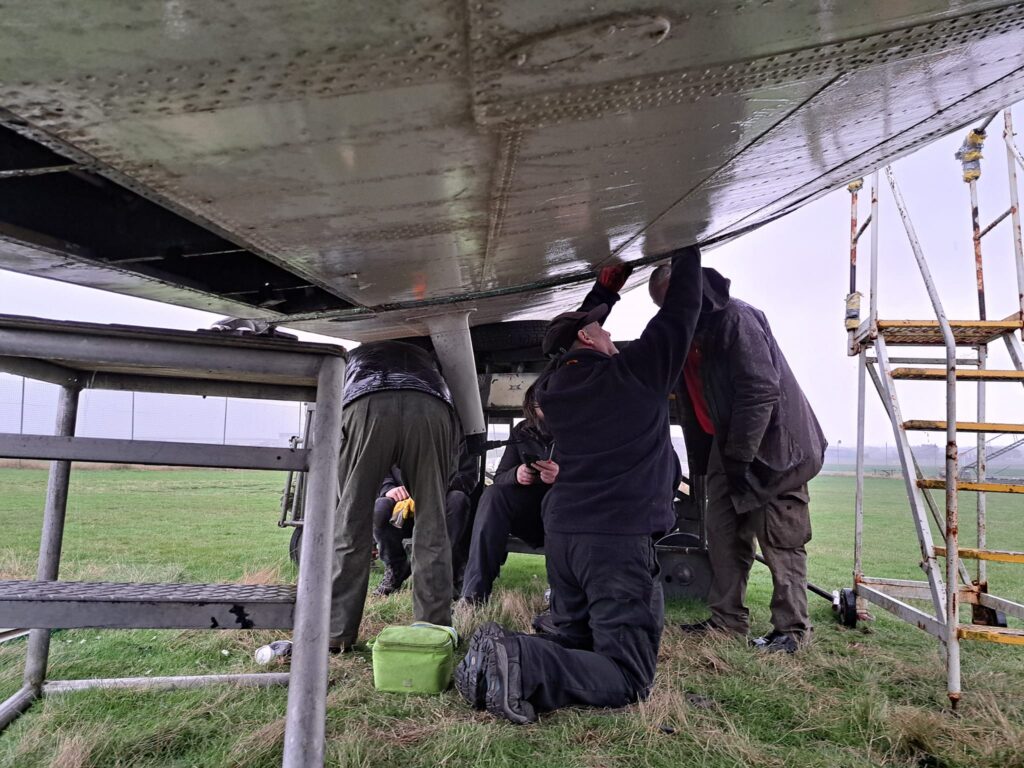
The rain then hit hard but we battled through, despite being drenched, removing the wingtip and the trailing edge before deciding enough was enough. The interior strip down team had done miracles too, getting the transport joins just about cleared. So, what’s left to do before 63 heads north?
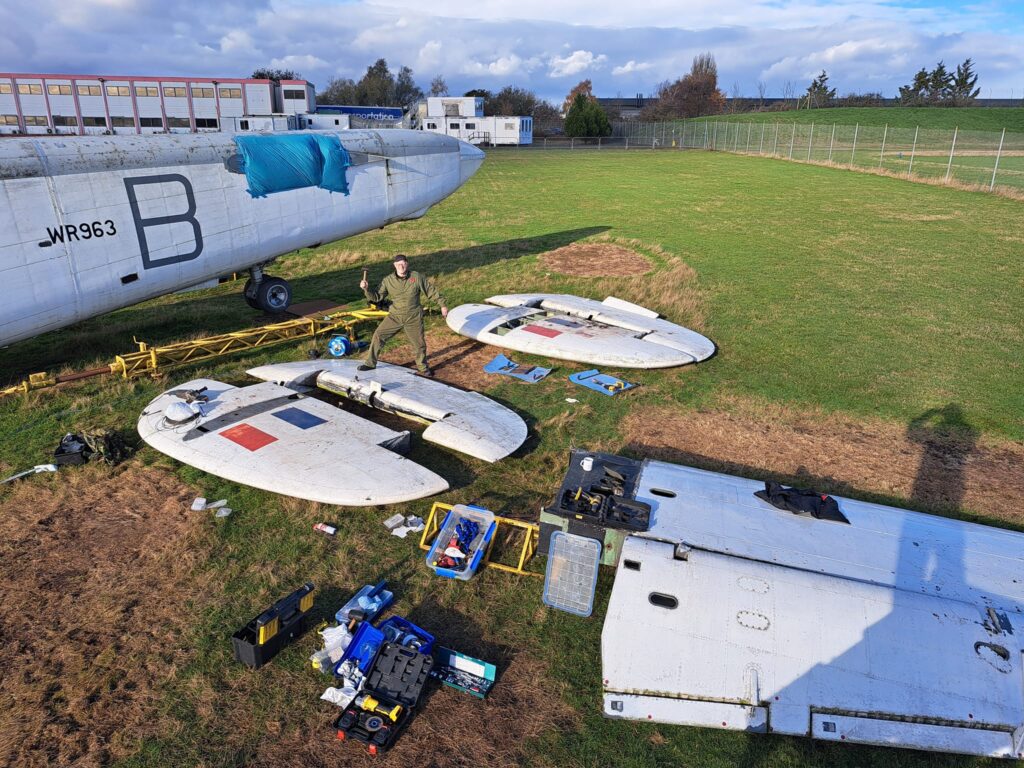
Aside from making the remaining trestles, the starboard wing trailing edge needs to come off, the fuselage needs breaking into 3 sections (cockpit, wing/fuselage centre section, fuselage from behind the rear main spar to tip of tail), then simply transport!
If you are a journalist and require more info about this story don’t hesitate to email pr@yorkshireairmuseum.org

Blackburn Mercury Monoplane 1911 (Replica) AH (BAPC) 130 YAM Jan.1995

The Blackburn Mercury Monoplane is regarded as the first truly successful aircraft made by Blackburn at their factory in Leeds. The Mercury I, powered by a 50 hp Isaacson radial engine, was displayed at the Olympia Aero Show in March 1911 and made its debut flying from the beach at Filey with the newly formed Blackburn Flying School. In May 1911, it flew from Filey to Scarborough and back in 19 minutes at an average speed of 50 mph, reaching an altitude of 1200 feet.
This aircraft crashed the next day when the engine seized and the propeller flew off! The Mercury I was followed by two Mercury II aircraft powered by 50 hp Gnome engines, and six Mercury III aircraft, with a number of different engines. Sadly, a Renault powered Mercury crashed at Filey in December 1911, killing an instructor and passenger.
The Museum’s replica was built for Yorkshire Television in 1979 for the Edwardian drama series ‘Flambards’, and was taxied with a car engine. It came to YAM on 10th January 1995 and after a long period in storage it was painstakingly restored to a superb display standard, and was unveiled in June 2000 by Professor Robert Blackburn, grandson of Robert Blackburn, the aviation pioneer.

AVRO 504K ‘H1968’ (Replica) AH (BAPC) 42 YAM Oct. 1994

The Avro 504 first flew in 1913. In the opening phases of the First World War, it served with front-line squadrons in the Royal Flying Corps and Royal Naval Air Service for bombing and reconnaissance, but from 1915 onwards the aircraft entered the training role for which it is most celebrated.

Over 8,000 Avro 504s were built. In 1918, the Royal Air Force had about 3,000, of which 2,276 were trainers.

The Avro 504 was stationed at many Yorkshire airfields, including Tadcaster near the A1/A64 junction, where a period hangar can still be seen.

The Yorkshire Air Museum’s replica was built by apprentices at RAF Halton and appeared at the Royal Tournament in 1968 to commemorate what was then fifty years since the end of the First World War. The aircraft was refurbished in early 2015 to be transported to Thiepval, Northern France, for the Somme Centenary commemoration event, on request of the British Government. In May 2018, it was also displayed at the impressive Hotel Les Invalides in central Paris for a joint RAF / French Air Force event to mark the Centenary of the Royal Air Force and over 100 years of British and French Air Force collaboration.