Yorkshire Air Museum 40th Anniversary

We are celebrating our 40th anniversary this year!

Here we look back over YAM’s growth from nothing but a derelict site to the amazing place it is today.

How it began...

RACHEL SEMLYEN MBE
CHAIR OF TRUSTEES

It began with an idea which came to fruition in 1982 when York was in the midst of a plethora of new museums like Jorvik Viking Museum and the National Railway Museum and I was press officer to the city council based at the department of tourism. I lived with my young family next to the abandoned wartime base. It was our playground. Its history was fascinating and other wartime airfields were fast disappearing.

I approached Jack Birch, chairman of Wm Birch & Sons, who had bought the site from the MOD. Jack was sceptical at first but gave us “three months to come up with a plan”. This of course stretched and was just the start of months of letter writing and negotiating. Looking back, I am in awe at the speed of how quickly things happened, and before the Internet or email.

Volunteers of all kinds, many with professional skills, had to be sought; the derelict site cleared and the foundation of a credible museum secured.

1982

5th October: an “Exploratory committee of the Air Museum Trust” held its first meeting at the Semlyen home, Brinkworth Park House, with Squadron Leader Ian Wormald, RAF, a flying instructors’ instructor, Mr Colin Gowan (who had heard about the plan) and Mr Jack P. Birch. 14th November: at the Elvington Remembrance Sunday service, we met Capitaine Gaby Calcagni who with the Free French had flown Spitfires. Gaby joined our committee and suggested we all paid £50 and so he, Ian and I became the first three members. Gaby was invited to visit the French Air Force Archives where he came across the original film shot here during the war by their Public Affairs office. They allowed us copies to show to visitors, which we still do.

Yorkshire Air Museum derelict site in 1982

1983

16th February: Chairman of the English Tourist Board, Michael Montague, came to York to visit Jorvik Viking Centre. My job was to plan his visit so after Jorvik and the Museum of Farming at Murton, he came to Elvington to see the site and meet me (left in the photo), Gaby Calcagni (far right) and Ted Fawcett, chartered architect (second right) and where with great aplomb, Ian Wormald flew in and landed a Jet Provost for him to sit in the cockpit. Three other Provosts ‘just happened to be passing’ in formation, making an impressive photo op.

Rachel, Gaby Calcagni and Ted Fawcett

1984

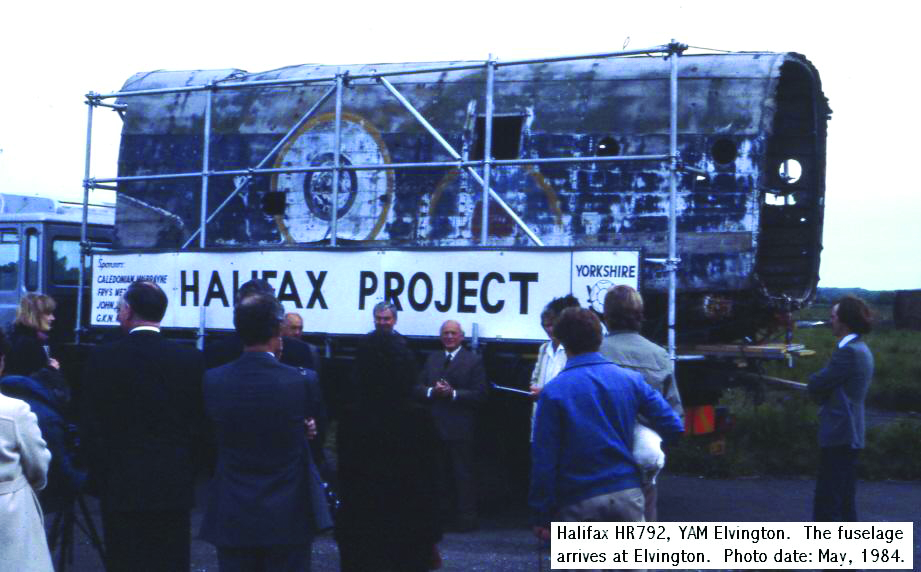
The Hebridean Mission. Ian Robinson revealed his idea to recreate a Handley Page Halifax and it started with an extraordinary expedition to rescue part of a crashed Halifax in the Outer Hebrides. Flight Lieutenant Rodney Burges flew over to take a look and reported that the fuselage was embedded in the earth as it had been used as a henhouse for forty years. But its owner, crofter Mr Mackenzie, had no problem offering it to us. Once cleared of debris it was airlifted by Chinook from RAF Stornaway to a ferry and thence by road to Elvington. The whole complex operation cost us nothing, such was the support and enthusiasm for the project. For the next three years, this corroded centre-section of Halifax was restored at British Aerospace at Brough as an engineering training project for apprentices.

H P Halifax HR792 Grimshader 18 - section

1985

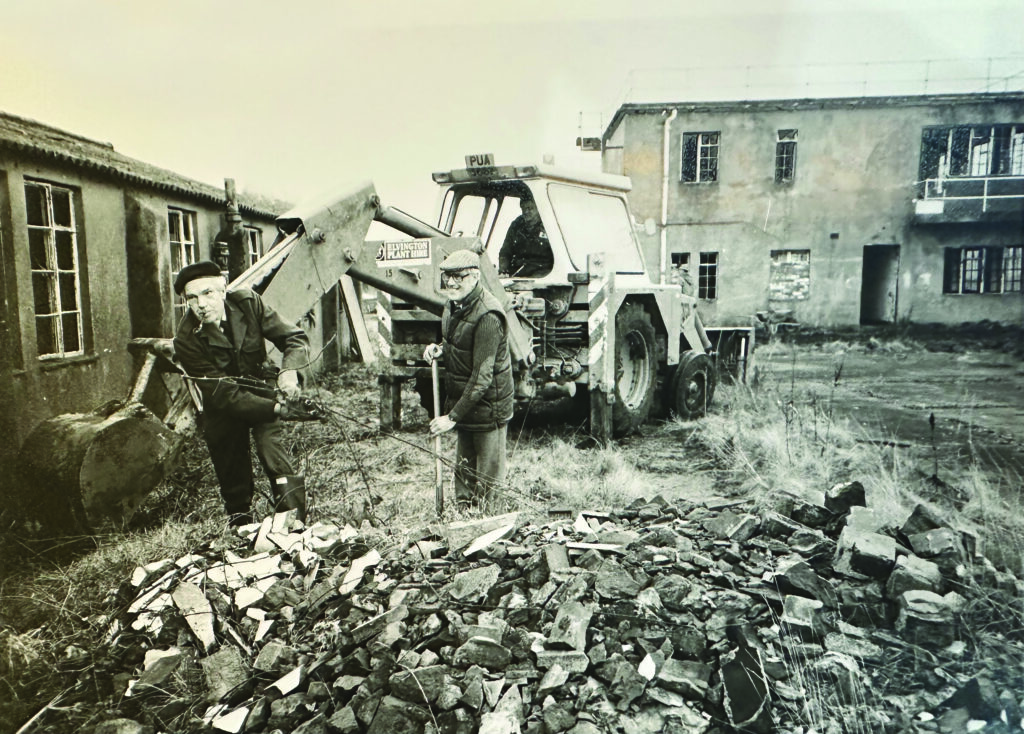
The legal stuff: The documents for a limited liability company were signed 20th May by seven Subscribers and deposited at Companies House on 26th June. The first statutory meeting took place 9th September. The Charity Commissioners approved the company’s charitable status with the number 516766 assigned. The Articles served us well, only being updated in June 2019. The first site clearance took place 1st April 1985 (with a break for lunch and an “extraordinary meeting” at the Grey Horse pub to decide what to do with two caravans that had been donated). Forty years of rubble, brambles and undergrowth had to be tackled. This was the first of many months of weekend teamwork by among others: George and Mick Britton, Rob Donley, Albert Powell, Keith Wheeler, Geoff Steggall, Bill and Margaret Jones, Janet and Maurice Voase.

Rob, a car mechanic in Elvington, became site foreman, later founding our fire service with fellow mechanic, Albert. After retiring only recently from our grounds and buildings team, Rob and Albert are still registered volunteers with us.

Clearing the site

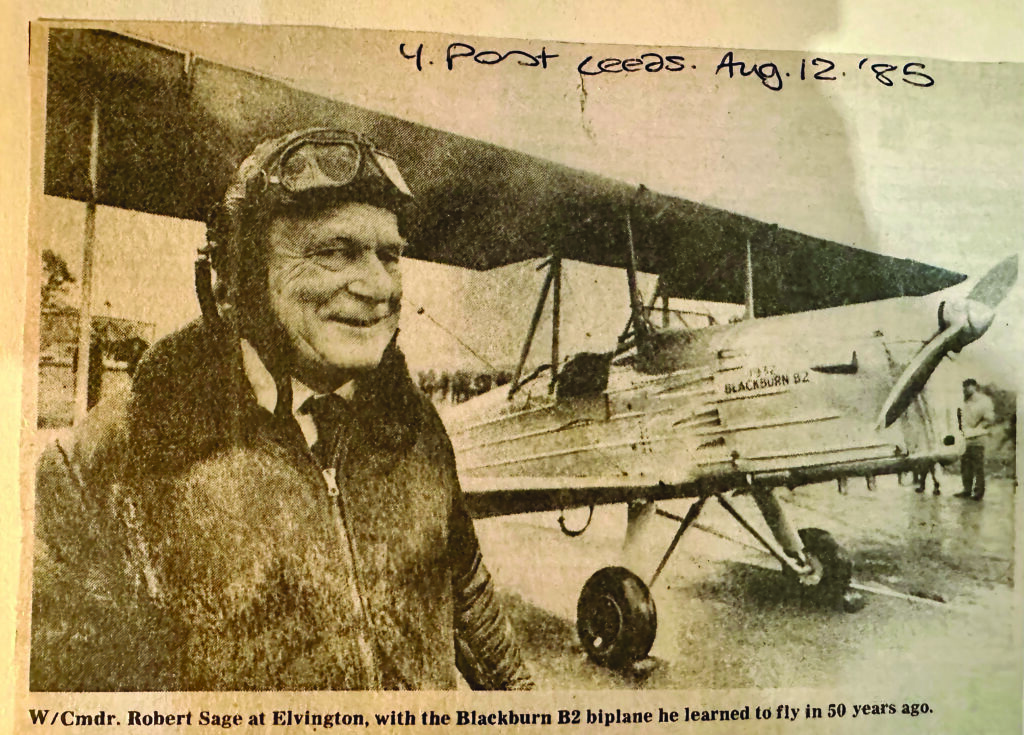
The first Open Day, August 11th: The 1930s Blackburn B2 flew in from Brough. A band played. Cadets helped steward. There were stalls, a coconut shy and a tombola. Wing Commander Gerry Norwood (77 Squadron) came with his 1932 Alvis. Entrance was £1.00 a car or 30p on foot. The crowds came and a satisfying £900 was made on the stalls, refreshments and entrance.

In newsletter No: 7: “…the Blackburn B2 emerged out of the mist like a silver bird, just as promised—thanks to British Aerospace’s intrepid test pilot, Dick Chandler. What was billed as a reunion flight brought a lump to everyone’s throat and overnight fame for Wing Commander Robert Sage whose deft handling of the B2 was reported by local and national Press and TV. Dressed appropriately, if wetly, in 1930s flying gear, he looped the loop and took the aircraft through its paces frighteningly near the treetops and roof of the Control Tower, recalling the days, fifty years ago when, as a student in 1936 he had last flown that very same aircraft. G-AEBJ.”

First Open Day

From the Group 4 Reunion in September we were able to welcome two of our patrons: General Jean Calmel DFC, a pilot with 346 Guyenne Squadron at Elvington and Air Chief Marshal Sir Augustus Walker who as Air Commodore (the youngest the RAF had ever seen) had been in charge of Elvington, Pocklington and Melbourne stations.

The newly-formed Amicale des Anciens des Groupes Lourds came from France. Picture shows the two patrons at the French memorial ceremony.

Walker & Calmel

1986

4th June The first visitor season (Sundays June to September), opened with flypasts: Victor XL160, a Canberra that took aerial photos and a starburst Jet Provost display from RAF Church Fenton.

The Control Tower was fitted out as it was in the French film. Ian Robinson, (seen at the desk), and live radio contact using wartime equipment between Wing Commander Robert Sage and the approaching Victor was an exciting moment.

1987

20th May: Halifax Fuselage back for an unveiling saw the return of the restored Halifax fuselage. It was a very popular event with hundreds of visitors coming to see the transformation from a crofter’s henhouse to shiny new main section of a Halifax. The Earl of Halifax came from Garrowby to give a welcoming speech, forty-six years after his grandmother had performed the christening ceremony of the first Halifax in 1941 at Radlett. The day was blessed with fine weather and an array of fly-pasts.
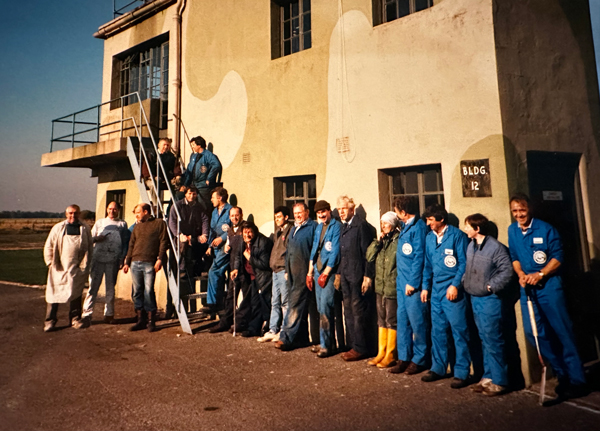
Regular work on clearing the site and restoring buildings was ongoing with stalwart volunteers of our ‘A’ Team.
Left to right: Alan Corbett, Don Harris, Jim Garnett, Ian Anderson, Albert Powell, Malcolm Laycock, Brian Thompson, Keith Wheeler, Les Dawson, Gary Cottingham, George Britton, Margaret and Bill Jones, Colin and Jay Ogden, Walter Eland. On the steps: Geoff Steggall and Rob Donley.

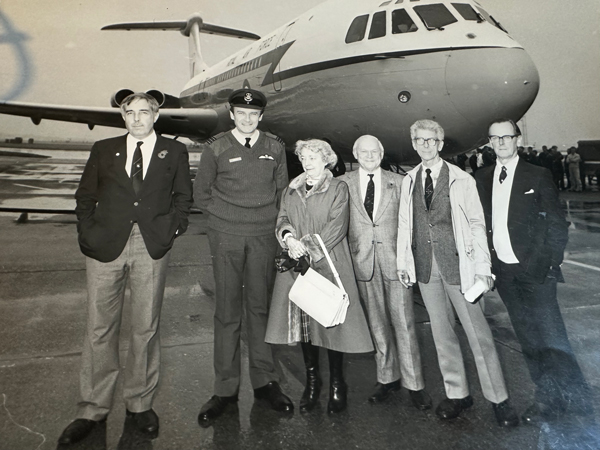
October: Book Launches: Volunteer Hon Secretary, Trustee and later a Chairman of the Board, Derek Reed, amongst his many contributions to the development of the museum, persuaded 10 Squadron RAF at Brize Norton to give Halifax Crew an aerial book launch in a VC10. The books were signed and “certified flown in” by author Flight Sergeant Arthur C Smith, Bomb Aimer with 10 Squadron at Melbourne, based on the diaries he kept in 1944 with Pilot Officer Leslie E Cunningham.
Left to right shows Derek with the pilot for the day, Officer Commanding of 10 Squadron, Wing Co Brian Syme, Peggie and Robert Sage, Arthur and Leslie. This was just one of Derek’s continuing initiatives for the publishing arm of the museum and another example of the wonderful support from the RAF over the years.

1988

18th May Spectacular open day for the season, Saturdays and Sundays for four months, was marked by the gift of Lightning XS903, flown in from RAF Binbrook together with a highly newsworthy meeting of Yvonne Farrow (code name Annette) of the SOE, reunited with the pilot who flew her into France in 1943; visits from Lettice Curtis, the renowned pilot with the Air Transport Auxiliary and Squadron Leader “Ginger” Lacey of Battle of Britain fame.
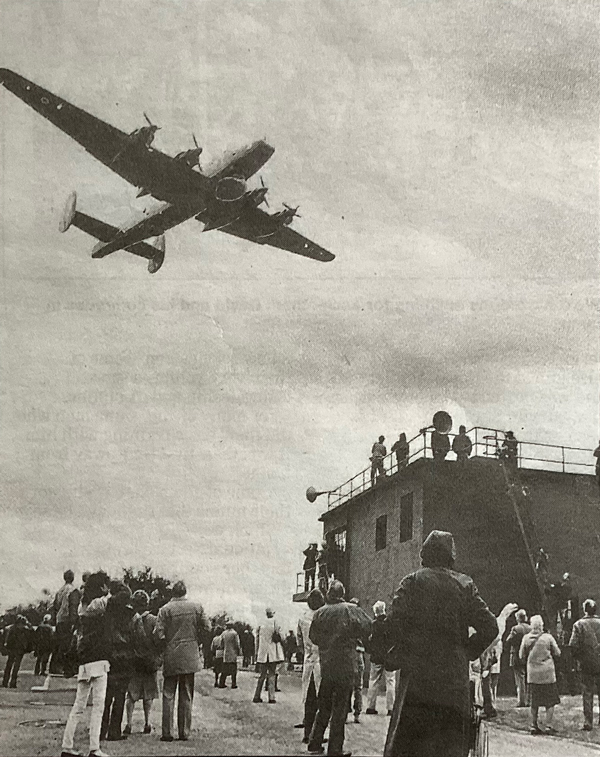
A crowd-pleasing parachute drop from a Hercules by instructors from Brize Norton was then capped by practice diversion flypasts of Canberra, Lightning, VC10 and a Shackleton to further entertain the crowds. What a day!

1988 Flyover

1989

The museum was open five days a week over 6 months.
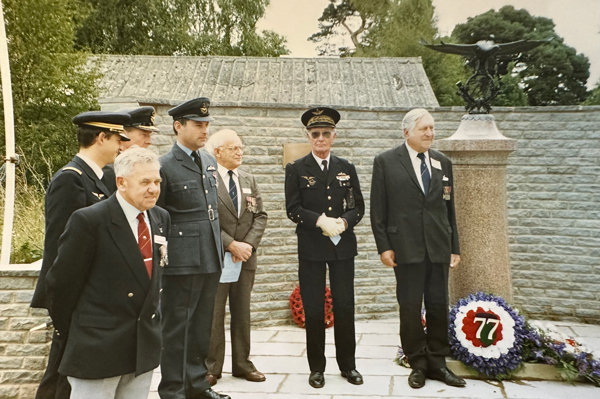
77 Squadron RAF Association: the first wartime squadron resident at Elvington, formed an official Association with a reunion and a memorial built at the entrance to the museum. The association continues to this day with members now the families and descendants of those veterans.

77 Squadron Memorial

1990

Thursday 7th June: Canada Day:
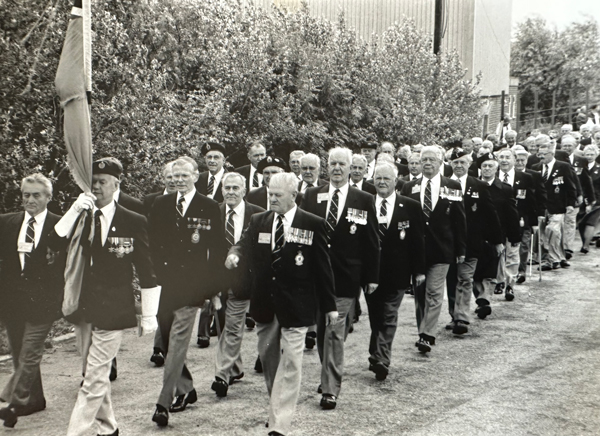
YAM’s largest ever veterans’ event saw 650 Canadian and RAF veterans taking part in an extended reunion organised by Ken Cothliff, the founder of 6(RCAF) Group Bomber Command Association. Ken remembers:
“We had two Canadian Air-Vice Marshals (Lt. Generals Reg Lane DSO, DFC*, and Chester Hull, DSO, DFC) acting as joint senior officers, Reg Lane taking the salute of the Guard of Honour provided by RAF Catterick, and the march-past of all the veterans. There was a flypast of RAF aircraft including Jet Provosts, Tucanos, Harriers, Canberra, Tornados, and Jaguars, with four Canadian CF18s from 420 “Snowy Owl” Sqn. from Baden Solingen in Germany. After lunch a further flypast of local vintage aircraft, including the Blackburn B2, flown by Dick Chandler and a PC-9 demonstrator from B.Ae. in Hull flown by test pilot and Trustee, Ian Wormald. Two very large marquees served as catering facilities, and for the Canadian Forces Europe Band in concert in the evening.”

Canada Day Parade

1991

Buccaneer XN974 flown in, donated by British Aerospace, Brough.

1992

17th March: Gloster Meteor NF 14 (WS788) arrives after being purchased by donations and refurbished over eleven months by volunteers at RAF Leeming. 25th March: Closing ceremony of RAF Elvington after 50 years. August: Air Spectacular.

1993

14th July: Purchase of museum site completed:
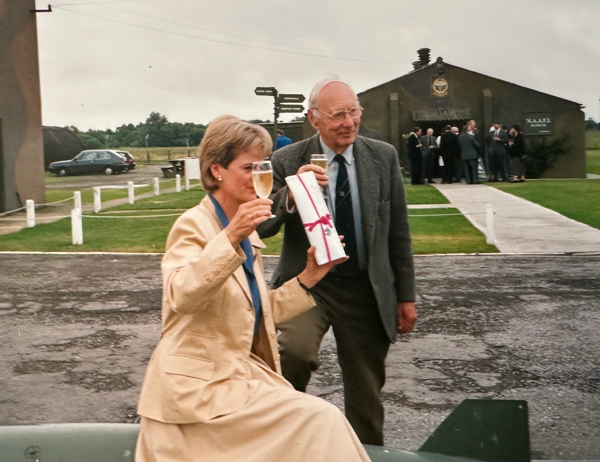
After eleven years of fundraising, £71,000 paid to Wm Birch & Sons secured us the deeds to six acres of the central section of the present museum site. (The site has later been extended to twenty acres). Nissen huts used as a hospital at wartime Appleton Roebuck were demolished, donated to us and re-erected, becoming with much refurbishment the present French officers’ mess, the station chapel and the conference suite. Picture shows the chairman of Birch’s handing the deeds to Rachel Semlyen. The French officers’ mess not yet in place between the tower and the NAAFI which was situated in the original ablutions block. Note the ventilators in the roof.
13th August: gift of a Canadian Air Force, Canadair Ct. 33A ‘Silver Star’ jet trainer. Previously a gate guardian for Canadian forces in Germany.

1994

17th May: T2 Canadian Memorial hangar commenced with a grant from the Lottery funded, NHMF and contributions from a specially set up Canadian charity Yorkshire Air Museum Canada, under Doug Sample who had flown with RCAF 6 Group at East Moor. Doug cut the first sod on May 7th.
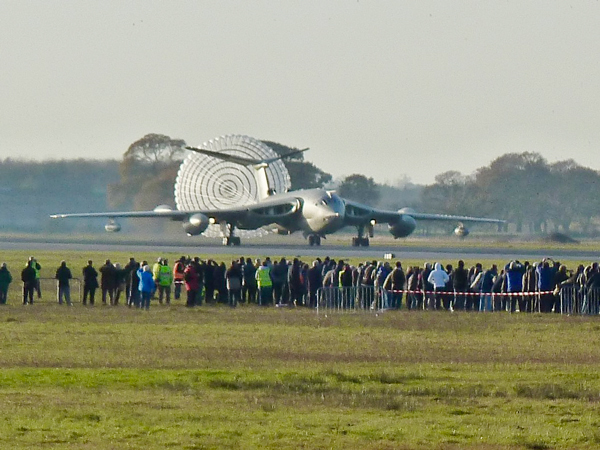
November 25th: Arrival of Lusty Lindy, Victor XL231: Flown into retirement in dramatic fashion from RAF Marham, the bomber turned tanker that had served in the Falklands and later in the Gulf War arrived on a misty day to great excitement. Acquired with the generous sponsorship of Knaresborough businessman, Gerald Tempest, it occupies pride of place on the site and is lovingly maintained by his son André Tempest and his team. Is this still the only the only place in the world where you can see two Handley Page bombers?

1995

April: cutting of the first sod for the Chapel by the Dean of York.
16th September: Official handover of French Mirage III E No.538, during the construction of the T2 hangar: As the home of 346 and 347 French squadrons from 1944-1945, it was long the ambition of our early trustees to feature a French military aircraft at Elvington. Derek Reed was the prime mover in the complex negotiations of obtaining the aircraft and subsequently its transportation from France, by sea and by road. Sponsors of the costs included Portakabin. It had been flown in 1972 by museum member Col Denis Turina whose father had flown Halifaxes from Elvington in WW2.

NOW SHOWING

Watch newsreels and footage from D-Day, plus our new animations of the story behind our Halifax – ‘Friday the 13th’ - and 'Operation Gisela', when the war literally come to our doorstep.

DISCOVER THE PAST, TODAY

Blackburn Mercury Monoplane 1911 (Replica) AH (BAPC) 130 YAM Jan.1995

The Blackburn Mercury Monoplane is regarded as the first truly successful aircraft made by Blackburn at their factory in Leeds. The Mercury I, powered by a 50 hp Isaacson radial engine, was displayed at the Olympia Aero Show in March 1911 and made its debut flying from the beach at Filey with the newly formed Blackburn Flying School. In May 1911, it flew from Filey to Scarborough and back in 19 minutes at an average speed of 50 mph, reaching an altitude of 1200 feet.
This aircraft crashed the next day when the engine seized and the propeller flew off! The Mercury I was followed by two Mercury II aircraft powered by 50 hp Gnome engines, and six Mercury III aircraft, with a number of different engines. Sadly, a Renault powered Mercury crashed at Filey in December 1911, killing an instructor and passenger.
The Museum’s replica was built for Yorkshire Television in 1979 for the Edwardian drama series ‘Flambards’, and was taxied with a car engine. It came to YAM on 10th January 1995 and after a long period in storage it was painstakingly restored to a superb display standard, and was unveiled in June 2000 by Professor Robert Blackburn, grandson of Robert Blackburn, the aviation pioneer.

AVRO 504K ‘H1968’ (Replica) AH (BAPC) 42 YAM Oct. 1994

The Avro 504 first flew in 1913. In the opening phases of the First World War, it served with front-line squadrons in the Royal Flying Corps and Royal Naval Air Service for bombing and reconnaissance, but from 1915 onwards the aircraft entered the training role for which it is most celebrated.

Over 8,000 Avro 504s were built. In 1918, the Royal Air Force had about 3,000, of which 2,276 were trainers.

The Avro 504 was stationed at many Yorkshire airfields, including Tadcaster near the A1/A64 junction, where a period hangar can still be seen.

The Yorkshire Air Museum’s replica was built by apprentices at RAF Halton and appeared at the Royal Tournament in 1968 to commemorate what was then fifty years since the end of the First World War. The aircraft was refurbished in early 2015 to be transported to Thiepval, Northern France, for the Somme Centenary commemoration event, on request of the British Government. In May 2018, it was also displayed at the impressive Hotel Les Invalides in central Paris for a joint RAF / French Air Force event to mark the Centenary of the Royal Air Force and over 100 years of British and French Air Force collaboration.